In an age dominated by digital calendars, productivity apps, and cloud-based task managers, old school planners continue to hold a strong and loyal following. These traditional paper planners – often leather-bound, handwritten, and intentionally simple – represent more than just a way to track appointments. They embody a mindset focused on intention, discipline, and mindful organization. This article explores what old school planners are, their defining characteristics, why they remain relevant today, and who benefits most from using them.
1. What Are Old School Planners?
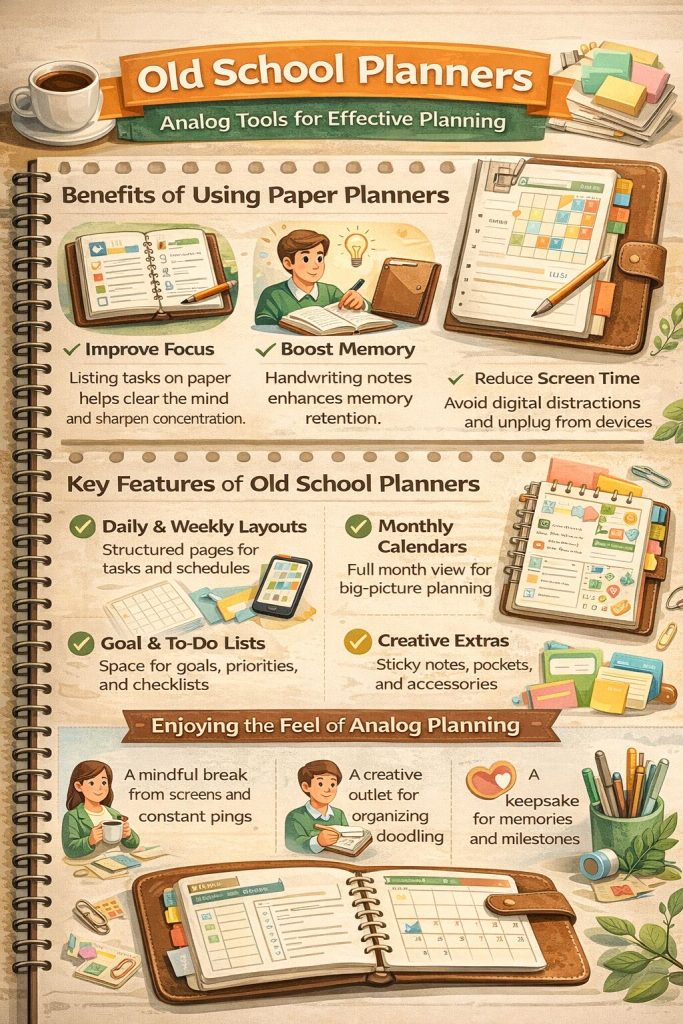
Old school planners refer to traditional, analog planning tools used long before smartphones and digital scheduling platforms became mainstream. They typically consist of printed pages organized by date, often bound in hardcover, leather, or refillable formats. Users manually write down appointments, tasks, goals, and notes rather than relying on automated reminders or digital syncing.
These planners prioritize structure, permanence, and tactile interaction. Instead of constant notifications and real-time updates, old school planners encourage users to slow down and think deliberately about how they allocate their time.
2. Key Characteristics of Old School Planners
Old school planners share several defining features that distinguish them from modern digital tools.
Handwritten Planning
All entries are written by hand. This process reinforces memory, clarity, and accountability, as users must consciously decide what deserves space on the page.
Structured Layouts
Most traditional planners include daily, weekly, or monthly layouts with clearly defined sections. Some also incorporate goal-setting pages, yearly overviews, and notes.
Durable Materials
Old school planners are often made with high-quality paper and sturdy covers. Leather planners, hardcover books, and refillable systems are especially common, designed to last through heavy daily use.
Minimal Distractions
Unlike digital devices, paper planners offer a distraction-free environment. There are no alerts, pop-ups, or external interruptions competing for attention.
3. A Brief History of Traditional Planners
Before digital technology, planners were essential tools for professionals, students, and households. Executives carried leather planners to meetings, students tracked assignments in academic planners, and families relied on written schedules to coordinate daily life.
Popular planner systems emerged throughout the 20th century, including appointment books, desk calendars, and personal organizers. These systems emphasized discipline, routine, and long-term planning, values that remain central to old school planning today.
4. Why Old School Planners Still Matter
Despite advances in technology, many people intentionally return to traditional planners. This is not a rejection of modern tools, but a response to digital overload.
Improved Focus and Retention
Studies and personal experience consistently show that writing by hand improves comprehension and memory. Old school planners help users internalize commitments rather than passively relying on reminders.
Greater Intentionality
Because space is limited, users must prioritize. Writing something down requires intention, which often leads to better decision-making and time management.
Reduced Screen Fatigue
For professionals who already spend hours in front of screens, a paper planner provides relief and balance.
Tangible Record of Progress
Old school planners become physical archives. Looking back through past planners offers a clear record of goals achieved, challenges faced, and personal growth over time.
5. Types of Old School Planners
Traditional planners come in various formats to suit different planning styles.
Daily Planners
Each day has a dedicated page, ideal for detailed schedules, task lists, and notes. Often used by executives and professionals with complex schedules.
Weekly Planners
Weekly spreads provide a balanced overview of responsibilities and priorities. This is one of the most popular formats for everyday use.
Monthly Planners
Focused on long-term planning, monthly planners highlight key dates, deadlines, and milestones rather than daily details.
Refillable Planners
Refillable systems allow users to reuse a high-quality cover year after year while updating the internal pages. These are especially common in leather-bound planners.
6. Old School Planners vs. Digital Planners
Comparing traditional planners with digital alternatives helps clarify their unique advantages.
Old school planners offer:
- No dependence on batteries or internet access
- Greater privacy and data security
- A slower, more reflective planning process
Digital planners offer:
- Automated reminders and syncing
- Easy editing and search functions
- Integration with other apps
Many users adopt a hybrid approach, using digital calendars for scheduling and old school planners for thinking, prioritizing, and reflection.
7. Who Uses Old School Planners Today?
Old school planners appeal to a wide range of users.
Professionals and Executives
Many leaders prefer handwritten planners for meetings, goal tracking, and confidential notes.
Students and Academics
Paper planners support focus, study planning, and assignment tracking without digital distractions.
Creatives and Writers
Artists, designers, and writers value the flexibility and tactile experience of paper planning.
Productivity Enthusiasts
People interested in time management systems often favor analog tools for clarity and discipline.
8. Old School Planning Systems and Methods
Traditional planners are often paired with classic productivity methods.
- Time blocking: Scheduling tasks in dedicated time slots
- Daily to-do lists: Prioritizing tasks manually
- Weekly reviews: Reflecting on progress and adjusting plans
- Goal breakdowns: Translating long-term goals into actionable steps
These methods emphasize consistency and self-awareness rather than automation.
9. The Aesthetic and Emotional Appeal
Beyond function, old school planners carry aesthetic and emotional value. The feel of quality paper, the look of a well-used leather cover, and the ritual of daily planning all contribute to a sense of ownership and pride.
For many users, planning becomes a calming routine rather than a chore. This emotional connection is difficult to replicate in purely digital systems.
10. Sustainability and Longevity
High-quality old school planners are often designed for longevity. Refillable systems reduce waste, and durable materials ensure long-term use. When chosen thoughtfully, traditional planners can be both practical and environmentally conscious.
11. Are Old School Planners Right for You?
Old school planners are especially well-suited for people who:
- Prefer writing over typing
- Want fewer digital distractions
- Value structure and routine
- Enjoy tactile, physical tools
They may be less ideal for users who need constant updates, shared calendars, or automated reminders.
12. Conclusion
Old school planners remain relevant because they address a fundamental human need: clarity and control over time. In a fast-paced, notification-driven world, traditional planners offer simplicity, focus, and intentionality. They are not outdated tools, but enduring systems that support thoughtful living and disciplined productivity.
Whether used alone or alongside digital tools, old school planners continue to prove that sometimes the most effective solutions are the simplest—and the most timeless.