Ever picked up a gorgeous notebook, started writing, and watched your ink bleed right through the page? It is incredibly frustrating, and it completely ruins the writing experience. I have spent years working directly with paper mills, and I am going to show you exactly how to decode paper weight so you never ruin another page. What GSM paper is best for notebooks?
The best GSM paper for standard notebooks is 80 to 90 GSM, which easily handles ballpoints and pencils. However, for premium travel journals or fountain pen users, 100 to 120 GSM paper is best. This heavier weight completely prevents ink from bleeding or ghosting through the pages.
But picking the perfect paper is not just about looking for the highest number on the label. Let’s dive into the manufacturing secrets behind GSM and how it actually impacts your daily writing.
What Exactly Is GSM?
If you have ever shopped for high-quality stationery, you have probably seen “GSM” plastered across the packaging. GSM stands for Grams per Square Meter. It is the universal metric that paper manufacturers use to measure the density and weight of a physical sheet of paper.
To calculate this, factories literally take a one-meter by one-meter square of raw paper and weigh it on a highly sensitive digital scale. If that massive sheet weighs 100 grams, the paper is classified as 100 GSM. It really is that simple.
A higher GSM number means the paper is denser, heavier, and usually more durable. When you are trying to avoid “ghosting”—which is when you can see the dark shadow of your handwriting on the reverse side of the page—you need to pay very close attention to this metric.
Decoding Notebook Paper Weights
Not all paper is created equal on the factory floor. Different notebooks serve different purposes, so manufacturers specifically select paper weights that match the intended use case and target price point.
I like to break down notebook paper weights into three main categories.
The 70 to 80 GSM Range
This is your absolute baseline. If you buy a cheap spiral notebook from a big-box store or a standard legal pad, you are almost certainly writing on 70 or 80 GSM paper.
It is lightweight, inexpensive to produce, and perfect for students who burn through hundreds of pages a semester. If you strictly use dry graphite pencils or standard oil-based ballpoint pens, this paper weight works just fine. However, if you touch a wet rollerball or a highlighter to an 80 GSM page, the ink is going straight through to the other side.
The 90 to 100 GSM Range
This is the sweet spot for everyday premium notebooks. At 90 to 100 GSM, the paper feels noticeably thicker and crisper in your hands.
Many professional planners and bullet journals use this weight because it offers a fantastic balance. It is heavy enough to stop most gel pens and fine-liners from bleeding through, but it is not so thick that the notebook becomes a heavy brick in your bag.
The 100 to 120 GSM Range
If you want the ultimate writing experience, this is the gold standard. I always recommend 100 to 120 GSM paper for premium travel journals, archival diaries, and executive notebooks.
This heavy paper handles wet fountain pen ink and heavy marker applications without breaking a sweat. It feels incredibly luxurious to turn the pages. When we manufacture high-end travel journals, hitting that 100+ GSM mark is a non-negotiable specification to ensure the product feels like a true luxury item.
Comparing Paper Weights and Pen Types
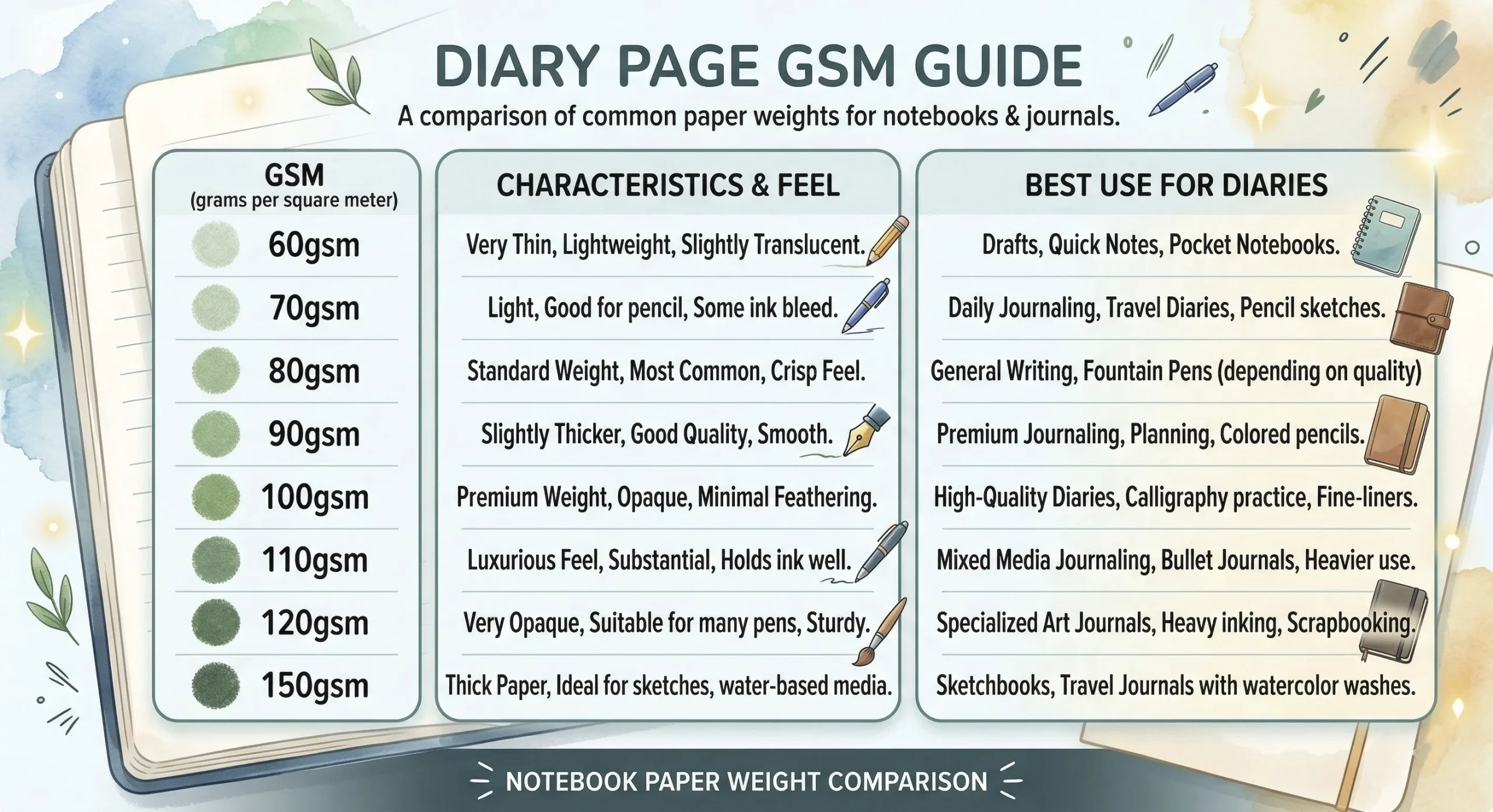
To make choosing a notebook incredibly easy, I put together a quick cheat sheet. Here is how different GSM weights stack up against your favorite writing tools.
| Paper GSM | Feel and Texture | Ink Bleed Risk | Best Pens To Use |
| 70 – 80 GSM | Thin, slightly translucent | High | Pencils, standard ballpoints |
| 90 – 100 GSM | Crisp, sturdy | Low to Moderate | Gel pens, fine-liners, highlighters |
| 100 – 120+ GSM | Thick, luxurious | None | Fountain pens, wet rollerballs, light markers |
The Calendering Illusion: Weight vs. Thickness
Here is a wild manufacturing secret that most people do not know. A higher GSM does not always mean the paper physically feels thicker. It all comes down to a factory process called calendering.
During production, massive rolls of paper are pushed through a stack of heavy, polished steel rollers called a calender. This machine literally irons the paper under immense pressure. The more the paper is ironed, the smoother and more compressed it becomes.
This means you could have a 100 GSM paper that has been heavily calendered, and it might actually feel thinner than a cheap 80 GSM paper that was left rough and uncompressed. If you want a frictionless, glass-like surface for your pen to glide across, you want high GSM paper that has gone through extensive calendering.
Manufacturing Insights: The Cost of Heavy Paper
You might be wondering, if 120 GSM paper is so amazing, why do notebook brands not just use it for everything? The answer comes down to complex manufacturing costs and supply chain logistics.
First, paper is bought and sold by the ton. Heavier paper requires significantly more raw wood pulp to produce, which instantly drives up the baseline material cost.
Second, heavy paper is an absolute nightmare to bind. When factory machines fold the large sheets of paper into smaller booklets (called signatures), thick paper resists the fold. It wants to pop back open. To get a 120 GSM notebook to lay perfectly flat, the factory has to use highly specialized sewing machines and premium polyurethane adhesives.
Finally, there is the shipping weight. When you are moving pallets of travel journals across the ocean, a 120 GSM notebook costs considerably more in freight fees than an 80 GSM notebook. All of these technical factors push the final retail price up.
The Secret Partner to GSM: Surface Sizing
While GSM tells you how heavy the paper is, it does not tell you the whole story about how it handles ink. If you are a fountain pen fanatic, you also need to care about “sizing.”
Sizing is a chemical treatment (often a synthetic resin) applied to the surface of the paper before it leaves the mill. It acts like a microscopic traffic cop, controlling exactly how fast the paper fibers absorb your liquid ink.
If a 100 GSM paper lacks proper surface sizing, your ink will still spread out and look fuzzy, a problem we call “feathering.” The absolute best notebook paper combines a high GSM for structural density with a heavy surface sizing to keep your ink lines razor-sharp.
How to Choose the Right Paper for Your Needs
Teaching you about factory rollers and paper pulp is only helpful if you can use that knowledge. Choosing the best GSM really comes down to analyzing your personal daily habits.
Here is exactly how I would choose a notebook based on specific needs:
- For the everyday student: Stick to 80 GSM. You need volume, not luxury. It keeps your backpack light and your wallet happy.
- For the office professional: Look for 90 GSM. It prevents your meeting notes from ghosting and feels crisp enough to look professional on a boardroom table.
- For the traveler and artist: You absolutely need 100 to 120 GSM. Whether you are sketching in a cafe or using a heavy fountain pen in a travel journal, this paper guarantees your ink stays exactly where you put it.
Summary
So, what GSM paper is best for notebooks? For general daily writing with ballpoint pens, an 80 to 90 GSM paper offers the perfect blend of affordability and function. However, if you rely on fountain pens, markers, or want the luxurious feel of a premium travel journal, you should upgrade to a 100 to 120 GSM paper. By matching the paper weight to your specific writing tools, you can completely eliminate ink bleed and enjoy a flawless writing experience every single time.