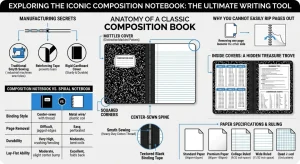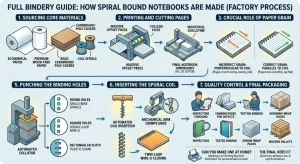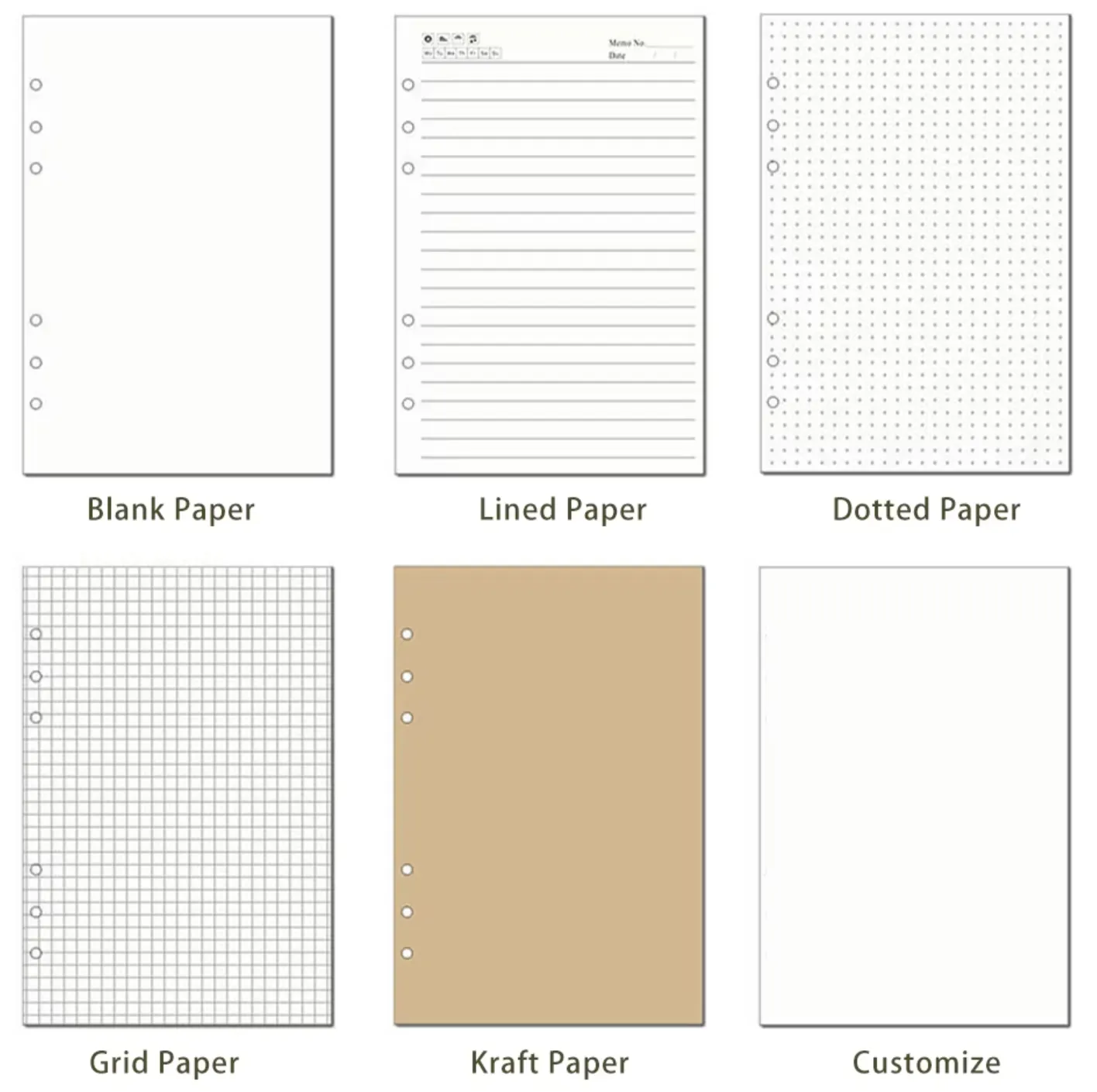
Have you ever bought a gorgeous notebook, only to find your favorite pen bleeds right through the page? It is incredibly frustrating, and I have ruined plenty of good notes that way. To help you avoid this frustration, I dug into the manufacturing specs to show you exactly what paper notebook brands use to keep your writing crisp.
Generally, most notebooks use uncoated woodfree paper, often called offset paper. Standard notebooks feature 70 to 90 GSM paper to balance cost and durability. Premium journals, however, upgrade to 100 to 120 GSM acid-free paper to prevent ink bleed-through and stop pages from yellowing over time.
But GSM and woodfree labels are just the tip of the iceberg. Let’s dive into the technical specifications and manufacturing secrets that separate a cheap notepad from a top-tier journal. Let’s start by decoding the core material of notebook paper.
The Core Material: Uncoated Woodfree Paper
When you flip open a standard notebook, you are almost always looking at uncoated woodfree paper. This is the undisputed industry standard for writing materials.
What is “Woodfree” Paper?
Despite the name, “woodfree” does not mean the paper is made without wood. Instead, it means manufacturers have chemically removed the natural lignin from the wood pulp during the manufacturing process. Lignin is the organic polymer that makes trees rigid, but it is also the culprit that makes old newspapers turn brittle and yellow in the sun.
By removing the lignin, manufacturers create a stable, bright white paper that holds up beautifully to everyday writing.
What is “Uncoated” Paper?
We call it “uncoated” because it lacks the glossy clay finish you see on magazine pages or photo paper. Uncoated paper is naturally porous. This is crucial for notebooks because that slight porousness allows liquid ink to absorb and dry quickly, preventing you from smudging your notes as your hand moves across the page.
Decoding Paper Weight: The GSM Metric
If you have ever shopped for a quality notebook, you have probably seen the letters “GSM” slapped on the cover. This stands for Grams per Square Meter.
GSM is the universal metric used by paper mills to measure the weight and density of a sheet of paper. A higher GSM generally means a thicker, heavier, and more durable page. If you want to avoid “ghosting”—where you can see the shadow of your writing on the reverse side of the page—you need to pay close attention to this number.
However, knowing the GSM is only half the battle. Here is a quick breakdown of how different GSM weights perform in the real world to give you a clear reference:
| Paper Weight (GSM) | Common Notebook Type | Ink Bleed-Through Risk | Best Pen Type to Use |
| 50 – 60 GSM | Cheap legal pads, scratchpads | Very High | Pencils, basic ballpoints |
| 70 – 90 GSM | Standard school notebooks | Moderate | Gel pens, ballpoints, rollerballs |
| 100 – 120 GSM | Premium bullet journals | Low | Fountain pens, fineliners |
| 140+ GSM | Sketchbooks, mixed-media pads | None | Markers, light watercolors |
Acid-Free Paper: The Secret to Longevity
If you are keeping a diary, drafting a novel, or taking notes you plan to keep for decades, you absolutely need acid-free paper.
Historically, paper was manufactured using an acidic sizing process. This made the paper cheap to produce but highly unstable. Over time, the residual acids in the paper break down the cellulose fibers, causing the pages to literally crumble to dust.
Today, premium notebook manufacturers use an alkaline papermaking process. They buffer the paper pulp with a mild base, like calcium carbonate, to neutralize any naturally occurring acids. This gives the paper a neutral or slightly alkaline pH level.
Ultimately, acid-free paper can last for hundreds of years without yellowing or deteriorating. If you are serious about archiving your thoughts, this specification is non-negotiable.
Manufacturing Insights: How the Paper Gets Its Feel
Have you ever noticed how some paper feels rough and toothy, while other paper feels as smooth as glass? That texture does not happen by accident. It is the result of a highly controlled manufacturing process on the factory floor.
The Art of Sizing
To stop ink from feathering (spreading out like a spiderweb), paper mills treat the paper with a chemical agent called “sizing.”
Internal sizing is mixed directly into the wet pulp vat. Surface sizing is applied to the dried sheet later on. This sizing acts like a microscopic dam, controlling exactly how fast the paper fibers absorb your ink. Premium notebook brands tweak their sizing formulas meticulously to cater to fountain pen enthusiasts who need precise, controlled ink absorption.
The Calendering Process
If a brand wants ultra-smooth pages, they run the giant rolls of paper through a machine called a calender.
A calender stack consists of heavy, polished steel rollers. As the paper passes through these rollers under immense pressure, the rough fibers are ironed flat. The more rollers the paper passes through, the smoother the final sheet becomes. Heavily calendered paper provides a frictionless writing experience, which is why your pen effortlessly glides across a high-end journal.
Specialty Papers You Might Encounter
While uncoated woodfree paper dominates the market, the stationery world has seen a massive boom in alternative materials. If you are looking for something a little different, you might run into these unique options:
- Stone Paper: Made by mixing calcium carbonate powder with a small amount of non-toxic resin. It is completely tree-free, waterproof, and impossible to tear. Writing on stone paper feels incredibly smooth, but gel ink can take a long time to dry on it.
- Recycled Paper: Created from post-consumer waste. It is fantastic for the environment, but the recycling process shortens the paper fibers. This often results in a slightly rougher texture and a higher chance of ink bleed-through.
- Cotton Rag Paper: Made entirely from cotton linters rather than wood pulp. This is the gold standard for archival documents and high-end artists’ notebooks. It is incredibly strong, flexible, and holds wet ink beautifully.
- Bamboo Paper: Bamboo grows exponentially faster than traditional timber, making it a highly sustainable pulp source. Bamboo paper is naturally soft, durable, and takes fountain pen ink surprisingly well.
How to Choose the Right Paper for Your Needs
Teaching you all these manufacturing specs is only helpful if you know how to apply them. Ultimately, choosing the right notebook paper comes down to your primary writing tool.
For instance, if you are a die-hard pencil user, you actually want paper with a little bit of “tooth” or roughness. A standard 70 GSM uncoated paper with minimal calendering will give the graphite something to grip onto.
On the other hand, if you strictly use standard ballpoint pens, you are in luck. Ballpoint ink is oil-based and thick, meaning it rarely bleeds or ghosts. You can comfortably use almost any standard 80 GSM notebook without overthinking it.
However, if you are a fountain pen aficionado or a heavy highlighter user, you need to be picky. You should actively hunt for notebooks featuring at least 100 GSM paper that is explicitly labeled as acid-free and heavily sized. This combination ensures your liquid ink stays crisp, vibrant, and exactly where you put it.
Summary
So, what paper is used for notebooks? The vast majority of notebooks are filled with uncoated woodfree paper, which has had its lignin removed to ensure a bright, stable writing surface. Standard notebooks typically use 70 to 90 GSM paper, while premium options step up to 100 to 120 GSM acid-free paper for superior durability and ink handling. By understanding these simple metrics, you can easily find the perfect notebook that handles your favorite pens without a hitch.